
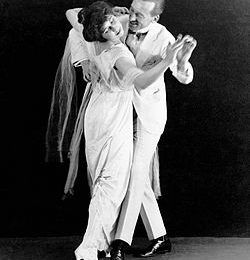
Ballroom dancing is a set of partner dances, which are enjoyed both socially and competitively around the world. Because of its performance and entertainment aspects, Ballroom dance is also widely enjoyed on stage, film, and television.
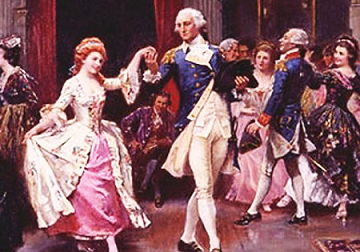
A Minuet, sometimes spelled "Menuet" or "Menuett", is a social dance of French origin from around the 1660s for two people, usually in 3/4 time. The minuet was to 18th-century ballrooms what the Waltz would be in the 19th century, the enduring grande dame of dances.

The Mazurka (Mazur or Mazurek in Polish) is a lively Polish folk dance, in triple time, intended for a circle of couples and characterized by the stamping of feet and clicking of heels, traditionally danced to the music of a village band.
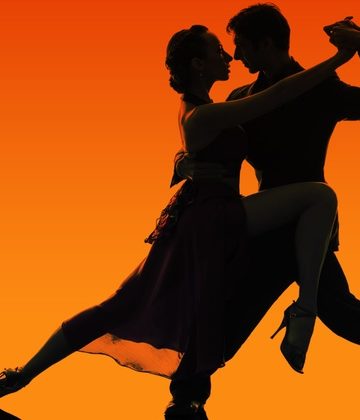
Argentine Tango is a partner dance that developed over the last century in Argentina's capital city, Buenos Aires. It is very different from the Tango in International and American Style Ballroom Dancing. Argentine Tango is an interpretive, improvisational social dance that allows the dancers to develop a deep connection between themselves, the music, and the environment in which they are dancing.
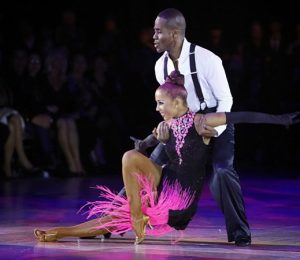
The term American Style refers to a particular style of Ballroom Dances developed in the USA that contrasts with the International Style. In a narrower sense, it denotes the group of 9 dances danced in American Style Ballroom competitions. The group consists of two categories: American Smooth and American Rhythm.

The Maxixe, occasionally known as the Brazilian Tango or the Mattchiche, is a dance, with its accompanying music, that originated in the Brazilian city of Rio de Janeiro in 1868 at about the same time as the Tango was developing in neighboring Argentina and Uruguay. It is a dance developed from Afro-Brazilian dances (mainly the Lundu) and from European dances (mainly the Polka).

An adjudicator is a person certified by a Professional DanceSport Organization to evaluate a DanceSport couple's performance based on given criteria.
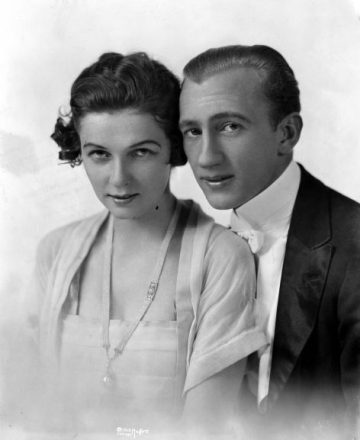
Vernon and Irene Castle were a husband-and-wife team of ballroom dancers and dance teachers who appeared on Broadway and in silent films early in the early 20th century. They are credited with reviving the popularity of modern dancing.
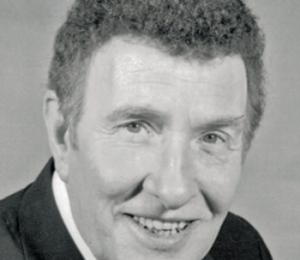
Walter William Laird (Wally) was a major influence in the development of Latin American dancing in Britain after the Second World War. A three-time World Professional Latin Dance Champion, he codified the International Style of Latin dance that now dominates the Latin and American half of Ballroom dancing.
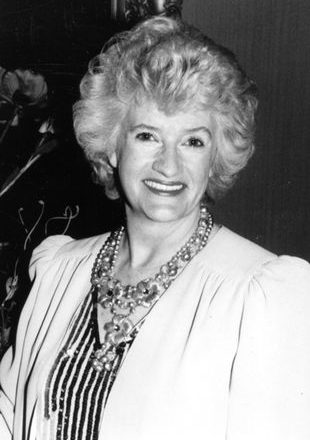
Rickey Geiger is one of the most influential women in the Ballroom Dancing industry. A former organizer of the Virginia State DanceSport Championships, Rickey is one of the original founders of the North American DanceSport Teachers Association (NADTA).